This is the sixth edition of the AMJ Counselling newsletter ͏ ͏ ͏ ͏ ͏ ͏ ͏ ͏ ͏ ͏ ͏ ͏ ͏ ͏ ͏ ͏ ͏ ͏ ͏ ͏ ͏ ͏ ͏ ͏ ͏ ͏ ͏ ͏ ͏ ͏ ͏ ͏ ͏ ͏ ͏ ͏ ͏ ͏ ͏ ͏ ͏ ͏ ͏ ͏ ͏ ͏ ͏ ͏ ͏ ͏ ͏ ͏ ͏ ͏ ͏ ͏ ͏ ͏ ͏ ͏ ͏ ͏ ͏ ͏ ͏ ͏ ͏ ͏ ͏ ͏ ͏ ͏ ͏ ͏ ͏ ͏ ͏ ͏ ͏ ͏ ͏ ͏ ͏ ͏ ͏ ͏ ͏ ͏ ͏ ͏ ͏ ͏ ͏ ͏ ͏ ͏ ͏ ͏ ͏ ͏ ͏ ͏ ͏ ͏ ͏ ͏ ͏ ͏ ͏ ͏ ͏ ͏ ͏ ͏ ͏ ͏ ͏ ͏ ͏ ͏ ͏ ͏ ͏ ͏ ͏ ͏ ͏ ͏ ͏ ͏ ͏ ͏ ͏ ͏ ͏ ͏ ͏ ͏ ͏ ͏ ͏ ͏ ͏ ͏ ͏ ͏ ͏ ͏ ͏ ͏ ͏ ͏ ͏ ͏ ͏ ͏ ͏ ͏ ͏ ͏ ͏ ͏ ͏ ͏ ͏ ͏ ͏ ͏ ͏ ͏ ͏ ͏ ͏ ͏ ͏ ͏ ͏ ͏ ͏ ͏ ͏ ͏ ͏ ͏ ͏ ͏ ͏ ͏ ͏ ͏ ͏ ͏ ͏ ͏ ͏ ͏ ͏ ͏ ͏ ͏ ͏ ͏ ͏ ͏ ͏ ͏ ͏ ͏ ͏ ͏ ͏ ͏ ͏ ͏ ͏ ͏ ͏ ͏ ͏ ͏ ͏ ͏ ͏ ͏ ͏ ͏ ͏ ͏ ͏ ͏ ͏ ͏ ͏ ͏ ͏ ͏ ͏ ͏ ͏ ͏ ͏ ͏ ͏ ͏ ͏ ͏ ͏ ͏ ͏ ͏ ͏ ͏ ͏ ͏ ͏
AMJ Counselling
 

This is the sixth edition of my regular newsletter. This edition focuses on the mental health crisis facing boys and men; the Netflix show, Adolescence; masculinity; and, what we need to do next as a society. 

I know there are loads of newsletters, bulletins and other great resources available on mental health, so I am really grateful to you for taking the time to read this one. I hope you find it interesting and helpful. I hope it provokes some reflection and offers food for thought. 

In this edition of the newsletter I focus on:

• Recent reflections - on my belief that we need to refocus our attention in schools away from the small stuff (e.g. uniform rules) and onto the big stuff that is robbing our teenagers of their childhoods - and in some cases of their lives.  

• Articles and other resources - I share a range of resources related to the issues raised in Adolescence, including abuse, online hate and  knife crime. I also share a podcast and book recommendation. 

• Featured blog post - with issues of masculinity at the forefront of so many minds since Adolescence landed like a thud across the world - not just the UK - I share a blog I wrote pleading for us to act fast before it’s too late. The post is entitled ‘Adolescence is a wake-up call to action. There is no time to lose.’

If you would like to find out more about me and my work, you can read some of my background, hear about my practice, and watch videos and listen to podcasts on my website by clicking on amjcounselling.com. You can also read previous editions of the newsletter - links to these are included at the end of this edition.

Thanks again for taking the time to read this edition, for subscribing, and for sharing this newsletter with others. If you have a friend or colleague you think would enjoy reading this newsletter, please pass it on. I would also welcome any feedback on the newsletter so I can improve it. Thanks a million.

Take care,
Ben  


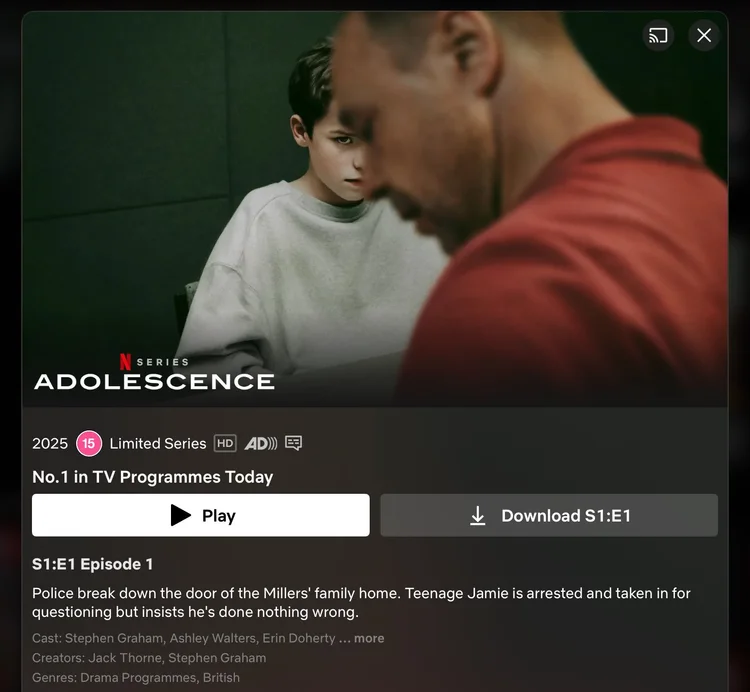
This is a screenshot from my Netflix account, showing the first episode of Adolescence. 

Like ITV’s Mr Bates vs The Post Office, Cathy Come Home (in the 1960s), Boys From The Blackstuff from the 1980s, and Jimmy McGovern’s incredible 1996 film ‘Hillsborough, Adolescence has achieved cut through like very few things can. It has captured the nation’s attention and is shaping a debate in the UK about boys, men, the role of fathers, the influence of people like Andrew Tate, the use of social media and smartphones in general, and what it is like to be a teenager in 2025.

I spend much of my working life in schools/working with young people, and was struck by how realistic - and dispiriting - some of the scenes in episode two (shot in a secondary school) were. It helpfully sines a light on how stressed, overstretched, under-resourced and over-worked the staff in schools are, and how difficult it is for them to have the time and space - and in some cases the knowledge - to spot the important stuff that is going wrong for our teenagers.  


Recent reflections

After watching Adolescence, I wrote a blog that had been swirling around in my head for some time, trying to capture my feelings about the need for us to refocus our efforts in schools towards spotting and helping resolve the big stuff and stopping sweating the small stuff. I’m sure some of my views will annoy some of my colleagues in schools but it is my strongly held belief that we are fiddling while Rome burns and we need to change direction - fast. 

I spend a lot of my working weeks in schools, or working with teenagers, parents, teachers and head teachers in my counselling room. I provide counselling to staff in three schools and am the parent of an 11-year-old girl who is in the final months of primary school. 

I also have two eyes and two ears and see and hear the realities of school life throughout my working days and beyond - from many perspectives. I pay attention. I listen. I see. I care.

I am not claiming to be an expert, or someone who knows more than the next person who works in education, but my views are forged through experience and listening to those who spend their lives in schools. I think a lot about the experiences I hear in my sessions with clients, and about my experiences of walking down corridors in schools. This listening, seeing and thinking leaves me deeply troubled.

I am troubled by the pressures on teachers and headteachers, and the pressures facing teenagers from exams to social media, to society’s expectations of being a boy or girl in 2025, to the relentlessly competitive nature of the world young people are growing up within. But I am even more troubled that schools are often operating as if it’s 1925 or 1975, not 2025. I am troubled that schools are fighting a losing battle to impose standards, values and behaviours that belong in a time long ago - and in times that are not coming back. 

I am troubled by the cost that this is having on the mental health of young people - and the opportunity cost of the time that could be spent on the life and death stuff that young people are actually facing today. The life and death stuff so brilliantly and brutally explored by Stephen Graham and Jack Thorne in Adolescence. 

What am I saying that schools need to change?

In short, schools need to stop the focus on the trees and see the wood. This means stopping the almost obsessive focus on uniform, make-up, hair styles, jewellery, nails, the length of school ties and school skirts, lip gloss, trainers (“they’re not shoes”), coats being worn on corridors, being called “sir” and “miss” and forcing students (at pain of detentions) to sit up and keep their hands and arms still (what they call “active listening”) which is happening in at least one school near me as one of my clients who has ADHD - and can’t keep his hands still any of the time - tells me. 

Instead, I believe that schools should focus on the toxic cultures (plural) that our young people are facing in their online and real-life worlds. I know the argument that flows from schools about the things they do focus on - it’s about standards and discipline. Get these things right and we get others right too. If children don’t follow these rules we cannot get them to follow the rules of grammar, algebra and other GCSE and A-level essentials. That may have been true when I was at secondary school (1989-1994) but that ship has long since sailed, and was given a final shove out to sea by the pandemic and the message that was in inadvertently sent that school was optional and not as important as staying at home. Respect for institutions has been falling for years: schools, police, banks, churches, parliament, the BBC - the list goes on - and respect for our elders is no longer a given - it needs to be earned by respect and understanding being offered first. 

I know too that schools say they do focus on the issues I am outlining - in Guidance and/or PHSE and across the curriculum - that they are trying to do both these things and the “standards” that I am saying they should care less about - but it is not working. Not at all. Not one bit. The results are clear - not just from the four episodes of Adolescence but from the evidence of our own eyes, every day in schools. 

If the definition of insanity doing the same thing over and over again looking for a different result, and that when you’re in a hole you should stopping digging, now is surely the time to stop and put the spade down. 

We need to change our focus and our priorities.

In almost every session with a student or an adult involved in education, I hear about the time spent - and the battles that follow - from the focus in schools on the “standards” stuff. It creates large resentment, wastes even larger amounts of time, and just gets in the way of building trust, rapport and relationships between teachers and students. It is trust and relationships that help us to educate - to help young people learn from our knowledge and experience and to help keep them safe and help them to thrive. The chances of getting a positive response from a student in a discussion about self-harm, drugs, sex, county lines, domestic violence, online image sharing, masculinity, safety on social media, knives, consent, having healthy relationships, sexuality, racism, eating and exercise and many, many other things in which lives and futures are stake, increase exponentially, if the previous one-way “discussion” in the corridor or classroom wasn’t an exercise in power and authority - with rules about why a second earring or lip gloss needs removing to support the student’s learning. 

These rules - these “standards” - are not helping anyone. They are barriers to trust and relationships. They are part of the problem not part of the solution. More relaxed uniform policies, for example, - everyone wearing PE kit every day - BTW there is no need for anyone to wear a tie in 2025 - will produce a more relaxed atmosphere (e.g. less tension, aggro, conflict, raised voices) which can produce more relaxed relationships and more listening and understanding. Having fewer rules: turn up to school and lessons on time; no raised voices; be nice; don’t be a dick; put your phone away during the day, and more two-way time to listen and talk would make a massive difference. It would allow us the space to focus on the stuff that is taking teenagers away from themselves and the path to happiness and safety. 

The length of a tie or a skirt, is much less important than the length of time students are spending hearing hate-filled, misogynistic content online. 

It’s 2025. It’s time for us to meet the challenges of 2025, not 1995 or even 2005. 

We need to fight today’s huge, life and death battles affecting teenagers, and not waste time on the battles of the past. Not only does this stuff not matter, but it’s getting in the way of the stuff that really does matter. 

It is 2025 and there isn’t a moment to waste. If Adolescence shows us anything, it’s that the clock is ticking on a time bomb which is going off in communities up and down the country every day. We need to act. Now.  

If you wish to share this blog/these thoughts with others, you can send them this link:

https://www.amjcounselling.com/amj-blog/stop-fighting-old-battles-in-school


Articles and other resources

If you follow me on social media (links below), you will see that I often share articles from the media that resonate with me and hopefully provide an opportunity for insights and reflection. 

If you would like to follow me on any of these platforms you will see my posts and the material I share.

My social media accounts

www.linkedin.com/in/benjaminjohnjones

https://www.instagram.com/benjaminjohnjones

https://bsky.app/profile/benjaminjohnjones.bsky.social

https://www.threads.net/@benjaminjohnjones

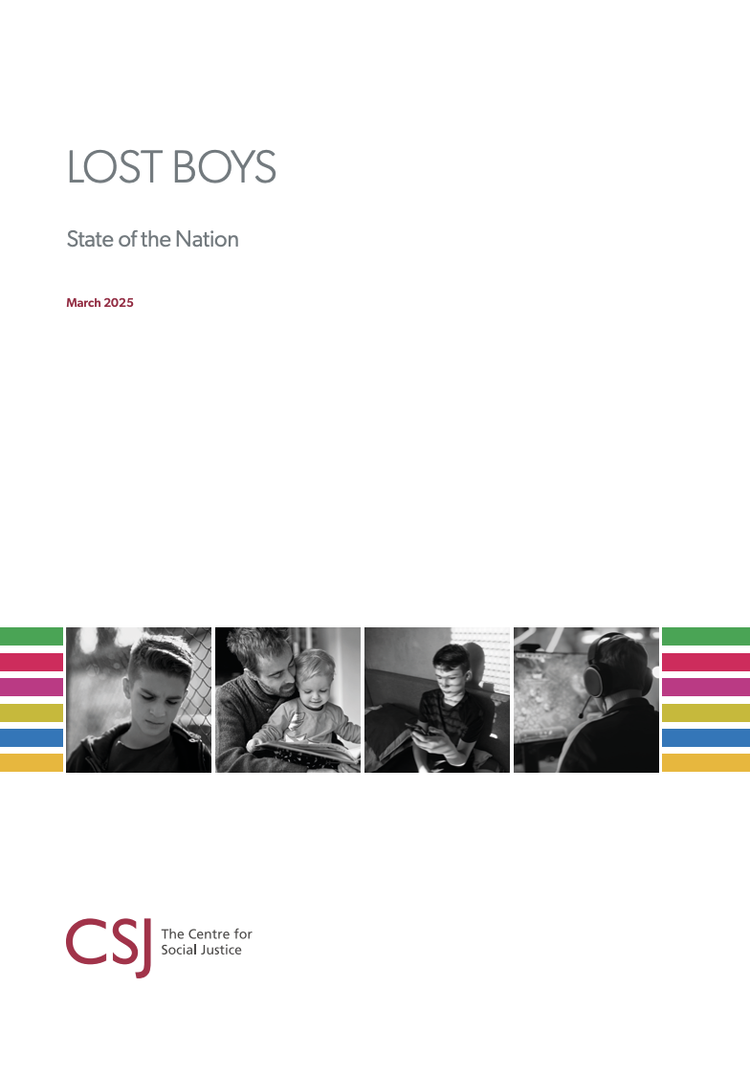
In March 2025, The Centre for Social Justice published an excellent report - ‘Lost Boys’ - highlighting the scale of the crisis for boys and men across a whole range of outcomes, including in mental health. It is essential reading for anyone working in education, social work, or indeed anyone who cares about boys in their life. 

This sentence - amongst many others - leap off the page in the report: “Boys are more likely now to own a smartphone than to live with their dad.”

https://www.centreforsocialjustice.org.uk/library/lost-boys


A deputy headteacher in one of the schools I work with sent an excellent email to staff after Adolescence was aired, flagging some of the key issues raised in the series and highlighted the need for everyone in the school to reflect and educate ourselves on the issues at play. She also provided a helpful list of organisations and resources aimed at helping tackle some of the issues raised. I have included these resources below. 

Misogyny, Harmful Sexual Behaviour and Peer-on-Peer Abuse

NSPCC – Harmful Sexual Behaviour Framework

Practical guidance on identifying and responding to harmful sexual behaviour in schools.

NSPCC HSB Framework HSB framework and audit | NSPCC Learning

Everyone’s Invited – Understanding Rape Culture in Schools

Insight into how misogynistic attitudes and sexual harassment manifest in school settings.

Everyone’s Invited Reports


DfE Sexual Violence and Sexual Harassment Guidance

Government guidance for schools and colleges on responding to sexual violence and harassment.

DfE Guidance [Withdrawn] Sexual violence and sexual harassment between children in schools and colleges - GOV.UK

Knife Crime, Youth Violence and Exploitation

Fearless (by Crimestoppers)

Anonymous reporting tool and resources to educate young people about knife crime and criminal exploitation.

www.Fearless.org

Ben Kinsella Trust

Interactive resources and workshops for schools on the impact of knife crime, youth violence, and peer pressure.

Ben Kinsella Trust

Safe4Me – Knife Crime Resources

Free PSHE resources and guidance from Hampshire Police for schools.

Safe4Me Knife Crime - Safe4Me – Hampshire Police's free education resource programme for schools, colleges and partners in Hampshire and the Isle of Wight


Online Safety and Grooming Risks

UK Safer Internet Centre

Training and advice on tackling online abuse, grooming, and exposure to violent or misogynistic content.

UK Safer Internet Centre

ThinkUKnow (by CEOP/NCA)

Age-appropriate materials and guidance for schools on preventing online exploitation and grooming.

ThinkUKnow

Podcast recommendation 

Adolescence has rightly sparked significant discussion about the impact social media and misogynistic influencers have on boys. Amol Rajan, from BBC Radio 4’s Today Programme, conducted an interview with Stephen Graham and Erin Doherty (from the series), and then published the full version on The Today Podcast. It’s worth a listen. 

https://www.bbc.co.uk/sounds/play/p0ktfd2w

Book recommendation

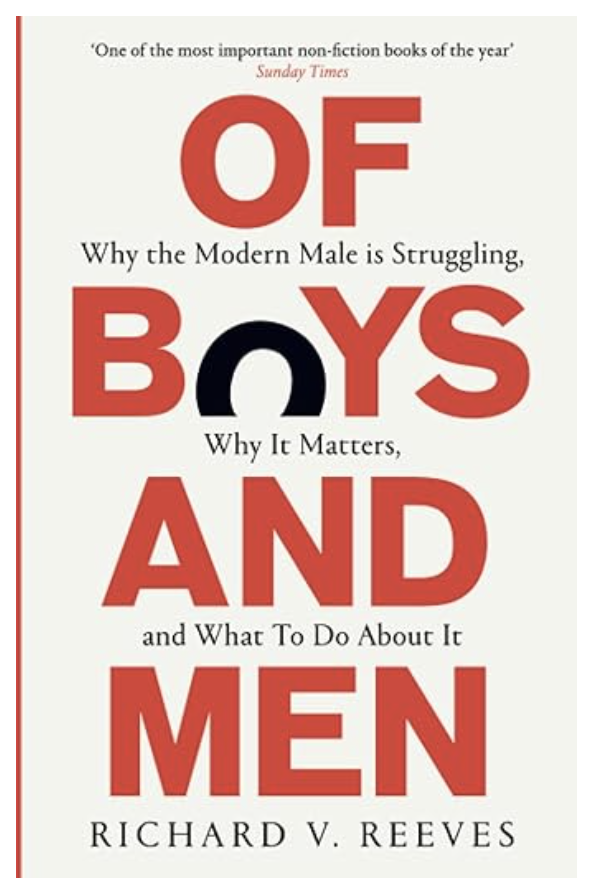
“In the UK, suicide is the biggest killer of men under the age of 45” - a stat that many of us working in mental health know all too well.

It is one of the themes of this book by Richard V Reeves, who explores why boys are falling behind at school and across the labour market. Richard Reeves argues that this is caused by structural challenges which therefore require structural solutions. He proposes - amongst other things - starting boys at school a year later than girls; getting more men into caring professions; rethinking the role of fatherhood outside of a nuclear family context. He says that feminism has done a huge amount of good in the world but that we now need its corollary – a positive vision of masculinity that is compatible with gender equality.

A thoughtful and thought-provoking read. 

https://www.amazon.co.uk/dp/1800751036?ref=ppx_yo2ov_dt_b_fed_asin_title


Featured blog post

Tue, Mar 18

Adolescence is a wake-up call to action. There is no time to lose.

For me, the most disturbing thing about ‘Adolescence’ - Netflix’s new four-part drama, which examines themes of knife crime, toxic masculinity, incels, the impact of internet/social media on young

 Read More 
 

Booking a session or getting in touch to find out more about me and my work

I offer sessions face-to-face, online or by phone. Sessions run for around 50 minutes and cost £50. I offer discounted rates of £35 per session for students. From 1 May 2025, I will be increasing my fees by £5 per session. From that date, student sessions will be £40 and other sessions will be £55. 

I offer a free initial consultation session to talk through my approach, answer any questions and help clients to consider if they think we can work well together before we get started.

To get in touch, please call, message or email me:

07779 796 815

benjones@amjcounselling.com


Please click on the links below to read editions
of the AMJ Counselling newsletter

Edition #1 - 10 November 2024

Edition #2 - 27 November 2024

Edition #3 - 1 January 2025

Edition #4 - 31 January 2025

Edition #5 - 12 March 2025

 
AMJ Counselling

AMJ Counselling, Southport, Merseyside, UK

Powered by Squarespace

Unsubscribe