
I’m not a control freak - I’m a feeling safe freak.
When I worked for big organisations and led teams of people, I had a one rule. I used to say to my colleagues: “I’m not Cilla Black: I don’t like ‘surprise, surprise’.”
I realised halfway through that cultural reference, that many of my readers - and definitely many, many of clients - would not have a clue what on earth I am talking about. Thankfully YouTube can help fill in the gaps - breathless singing and all.
My application of this ‘no surprises’ rule was universally known by my teams - I went on about it enough - and I often talked about not caring how bad the news was; the size of mistakes; the embarrassment we faced; or the poorness of the behaviour or judgment that had occurred, I just wanted to know about it. Alongside this golden rule, I also tried hard to focus on dealing with the information as calmly and supportively as possible, regardless of the implications.
It served me well, and, although the large and wide variety of colleagues who worked with me will have a large and various range of views on me and my leadership, I doubt many would not have been clear on this expectation of them.
Why, now then, over eleven years since my breakdown and my decision to leave big organisations, corporate life, and to work for myself (mostly), am I harping back to this Pricilla Willis-inspired experience?
The short answer is my clients.
They prompt and inspire in me in so many ways, with their experiences in life; the ways they process and handle difficult information and traumas; how they describe and explain their needs; and how they react to the many things that are thrown at them. For me, being a counselling/psychotherapist is the best job in the world. It is a privilege beyond words to be trusted by people with their most personal, complex and private feelings and experiences, and to be allowed the chance to try to help them make sense of these feelings and experiences, and to hopefully affect some change and improvement.
The privilege extends to the opportunity they provide for me to reflect on my own life; my own experiences; my own feelings; my own reactions. They inspire me - often with their extraordinary courage to deal with the cards they have been dealt - to try to keep improving and be a better version of myself.
This recent bout of ‘surprise, surprise’ reflections has arisen from a number of client discussions. It left me wondering why this is so important to me. Why do I need to avoid or manage surprises? Why does the idea of a surprise make me feel anxious - in fact, much more than that, it makes me feel sick? Am I, as many clients say of themselves, a control freak?
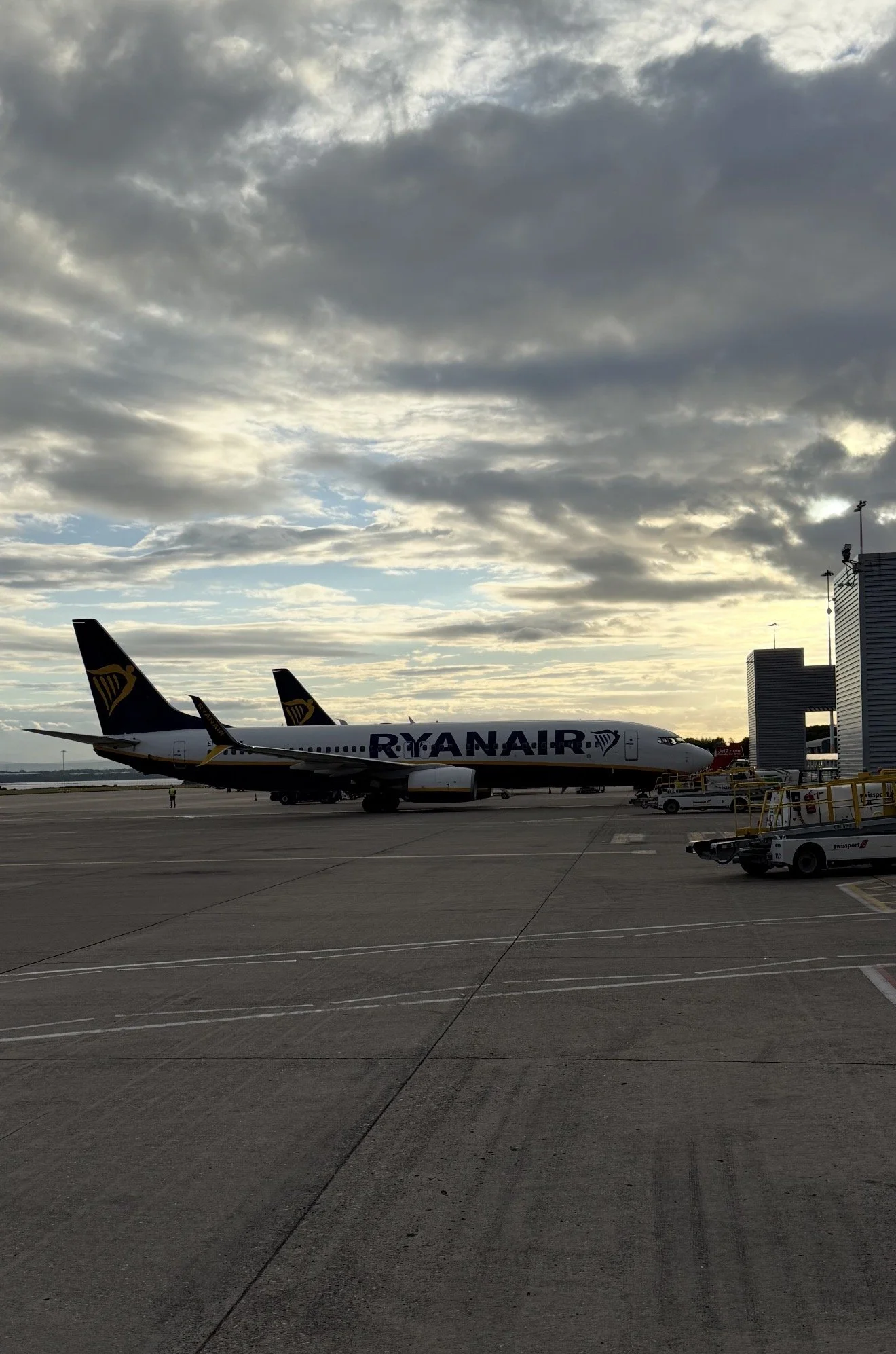
Part of my reflecting took me to the question of what situations cause me the most discomfort and where does the need to avoid surprises or unexpected-ness (not a word!) fit? Coincidentally, I am partly writing this blog post whilst encountering one of my least favourite and most anxiety-inducing experience, which brings up all this fears and stress about surprises: flying.
The experience of flying for me is a great example of this whole issue. My fear (and loathing) of flying is not about fear of crashing (although that sounds pretty bad and to be avoided in an ideal world!), it is a fear of the unexpected. My least favourite part of flying - by some distance - is the experience of turbulence.
Now I know that lots of people don’t like the feeling of turbulence, and that it is “normal” to find that disconcerting or uncomfortable, but when I reflect on it deeply, it is the fear of the unexpected that is the source of anxiety for me not the bumps and drops and movements of the plane.
I obsess. Will there be turbulence? If it starts, when will it stop? Will it get worse? Will the seatbelt sign be switched off? Is it over yet? Is the plane going to drop in the sky? Does it help if I grip the seat or the arm rest or my own leg?
I now know that this experience of flying mirrors so many of my anxiety experiences: it is the fear of not feeling emotionally safe.
What do I mean and why does it bother me?
For me, feeling emotionally safe is when I know that everything will be ok. That I will be ok. That the people around me love me; won’t leave me; will care about me; will keep their promises to me; won’t lie to me; won’t hurt me; will accept me.
When I fly, or when I am in other situations when the outcome is unclear and am facing surprises or unexpected behaviours or issues, it unsettles me because I am not sure what happens next and will what happens threaten my sense of emotional safety. Not being able to prepare myself for what is coming makes me feel vulnerable - or in other words, unsafe.
My response to possible surprises, and therefore to feeling unsafe, is to try where possible to control as many of the variables as possible. Take flying. I know that there is nothing I can do to control the process of flying the plane and avoid the unexpected-ness (that word again!) of turbulence, so instead I try to control other things.
Where I sit (window); what I read (Man Search For Meaning and the New York Times); how much I talk (very little); what I listen to (music throughout); what time I arrive for the flight (very early!), how quickly I get to the gate (the second the gate number is named), which bag I take (my favourite), and so on and so on, including trying to find the weather en route and listen intently to the Captain, in case they provide me with information about any turbulence ahead. Being forewarned is forearmed for me. No surprises.
Lots of routines. Lots of small rituals. Lots of ways and trying to create the feeling of calm: of safety. And anything that moves me from that path - any surprises - remove my sense of control and therefore my sense of safety.
I know that my pre-flight and mid-flight ways of being have no bearing at all on the amount of turbulence I may encounter once airborne, but it gives me some sense of control over my environment and my state of mind.
When someone has an anxious attachment style - as I do - and someone lives in constant fear of abandonment - as I do - that someone is prone is anxiety and needs to control as much as possible . To eliminate risk. To reduce the possibility of things going wrong. To prevent a disaster. That is not about control, it is about safety. Emotional safety.
When I board a plane, I don’t need to listen to the safety demonstration, I’m already well into my own safety demonstration. It starts when I wake that morning. It is in my mind all day until we land. I know where my emotional emergency exits are, and how to find my mental lifejacket.
I know that many people will think of my approach to flying as textbook control freak-ery. But I know it is not that. I know it’s about much more than that. It is about looking after the little boy I am still trying to heal who lives deep inside me.
I know that I’m not a control freak, I‘m just a feeling safe freak.
